PIM · Catalogue · Multi-channel · Marketplaces · Translations
Centralised product catalogue management
When the same product is described in the ERP, the store, the marketplace and a PDF catalogue, all four end up different. A PIM centralises product information in one place and publishes it to every channel. PIM is one of the TargX One modules: it works on its own or connected to the warehouse, orders and ERP. The screens on this page are from the PIM in use at Gemma, an online crystal store.
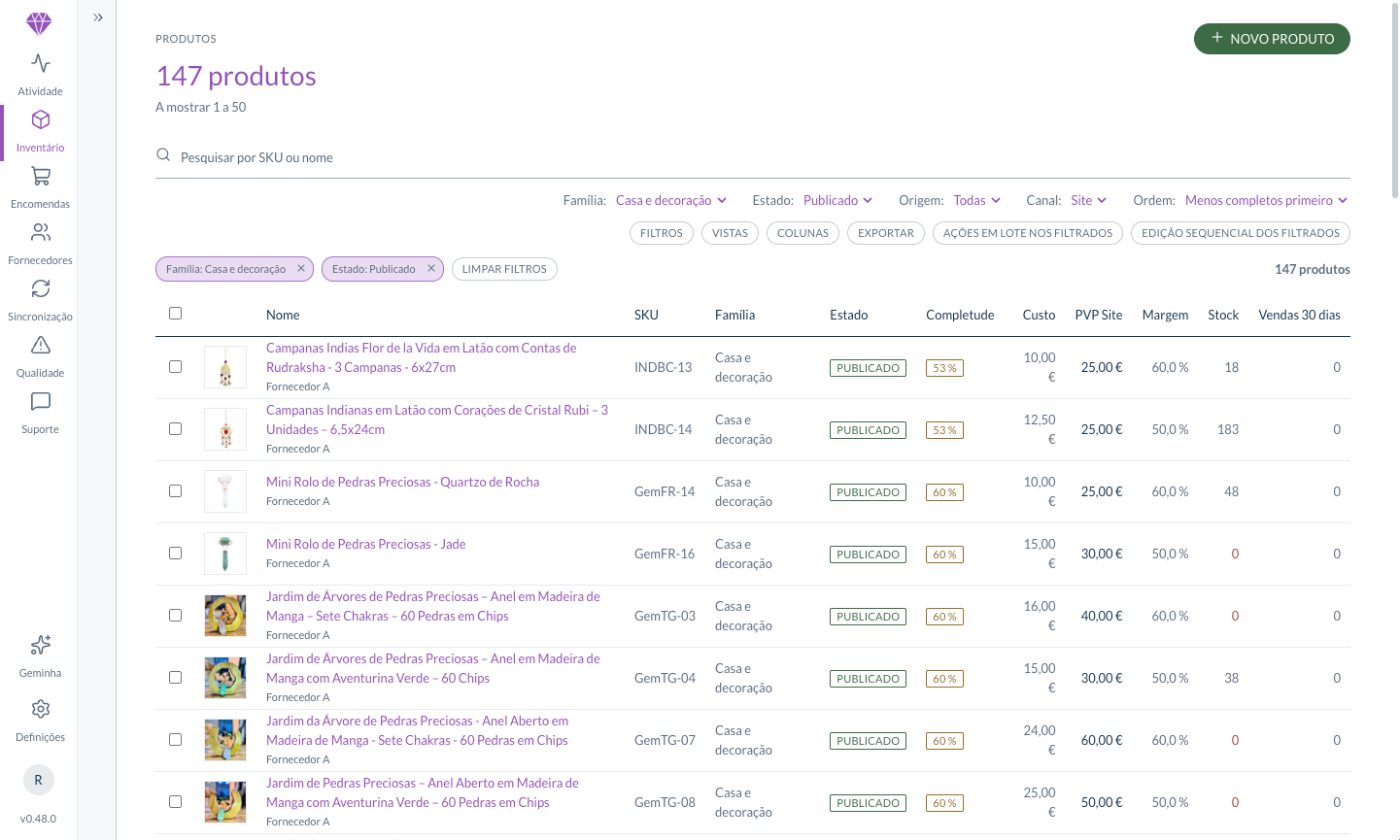
What a centralised PIM solves
The catalogue problem is not storing the information, it is keeping it consistent as the number of products and channels grows.
- Different descriptions and attributes for the same product on each channel
- Images and datasheets scattered across folders and people
- Translations out of step with the original version
- Slow product launches, because the work has to be repeated per channel
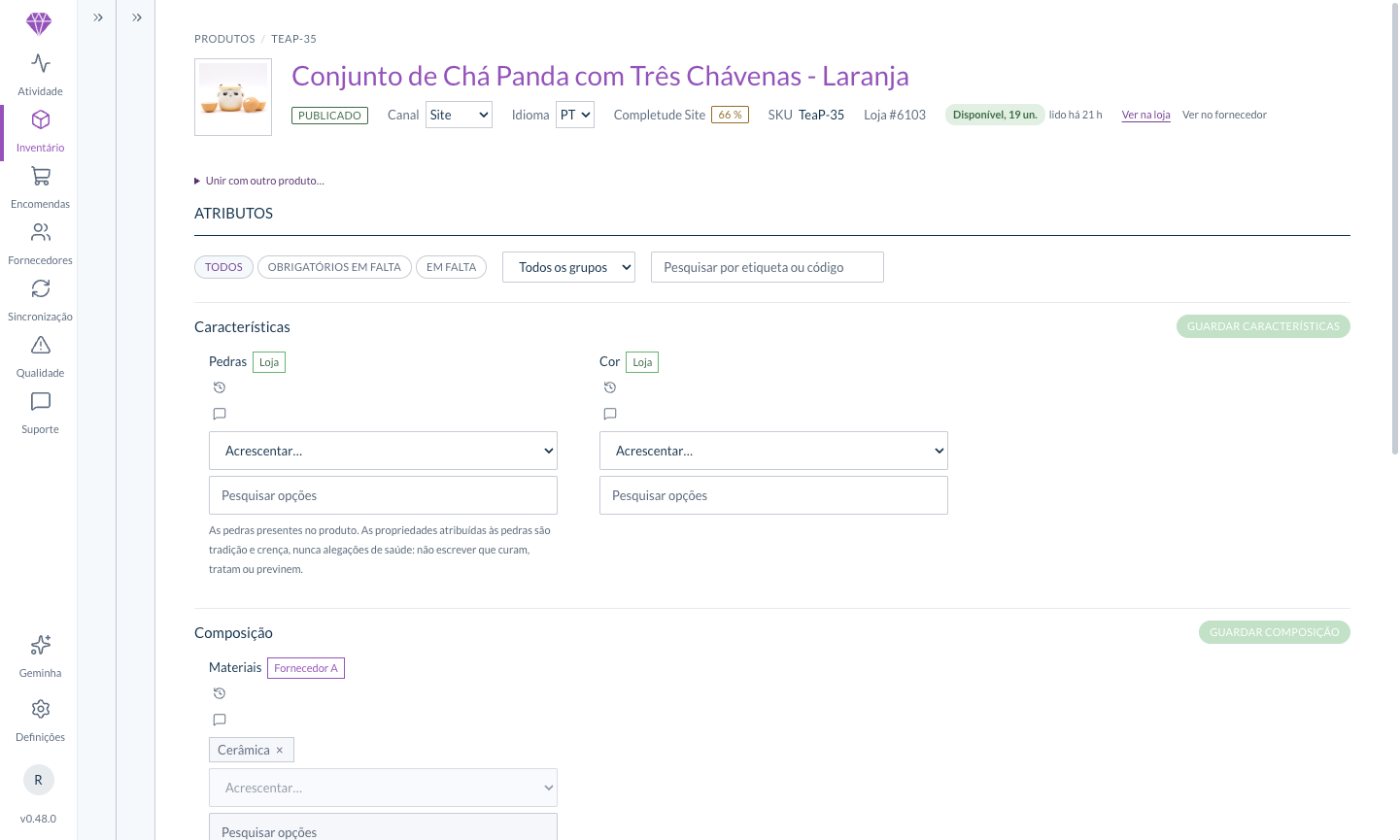
How it connects to sales channels
The PIM becomes the source of truth for commercial product information, while the ERP remains the source for stock and price.
- Publishing to the eCommerce platforms you already use
- Export to marketplaces and to reseller partners
- Managing translations and per-market variants
- Tracking which products are complete and ready to publish
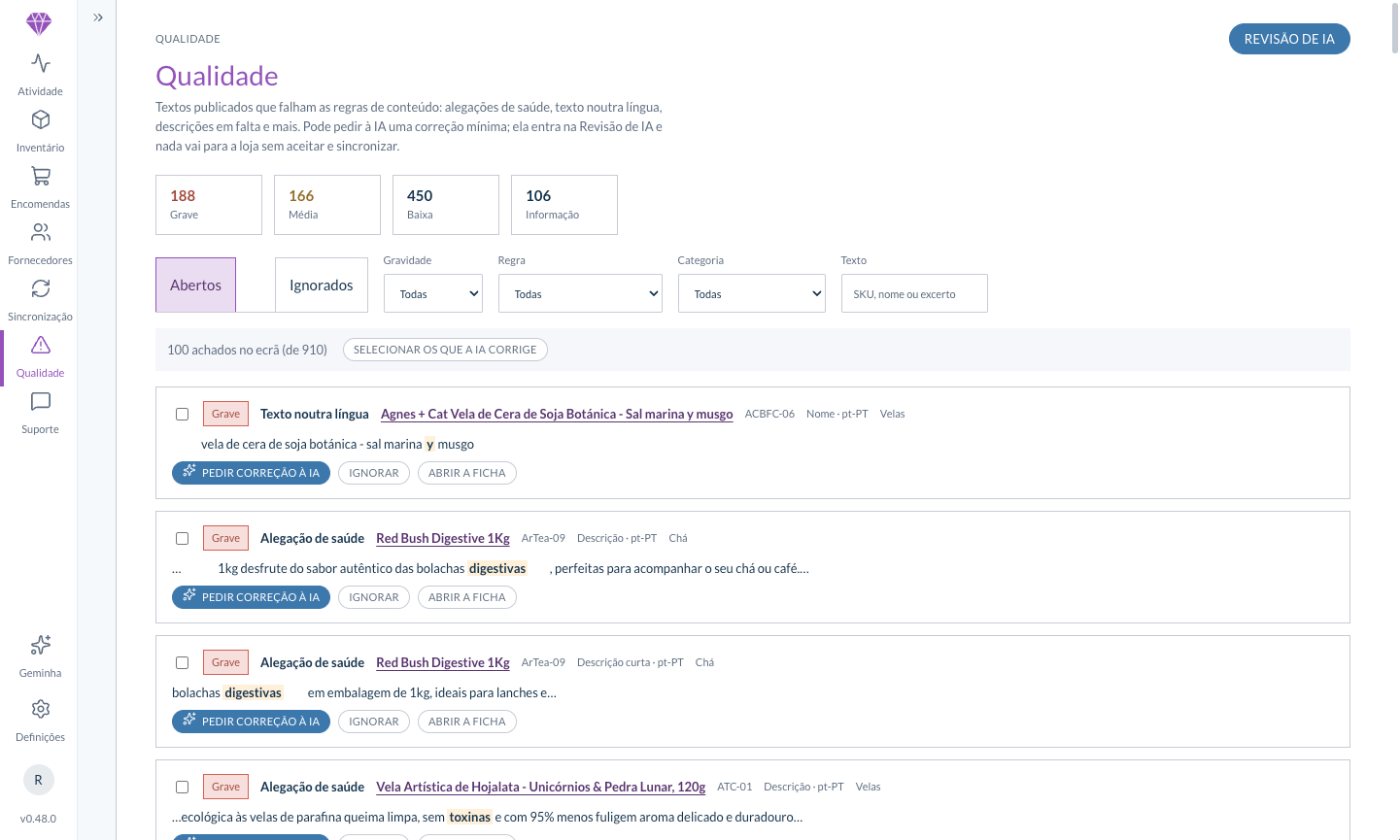
How we proceed
The hard part of a PIM is not the tool: it is deciding the attribute structure and cleaning up what already exists.
- Mapping the catalogue structure and the attributes needed
- Defining who is responsible for maintaining each field
- Migrating and cleaning the existing information
- Connecting the channels, one at a time
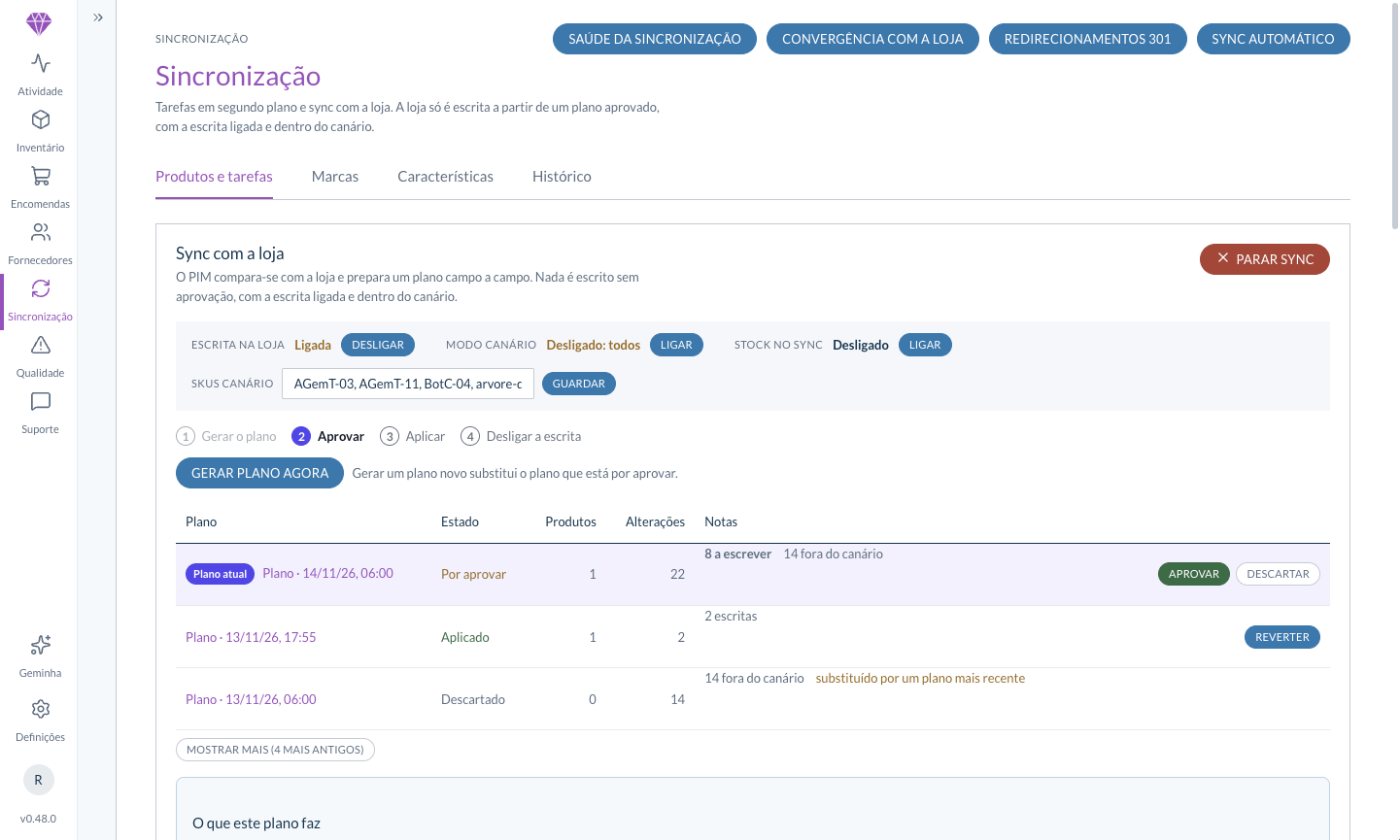
Other catalogue projects
Shall we look at your operation?
Tell us where the manual work is today (warehouse, catalogue, orders or customers) and we will explain where we would start, connected to the ERP you already have.